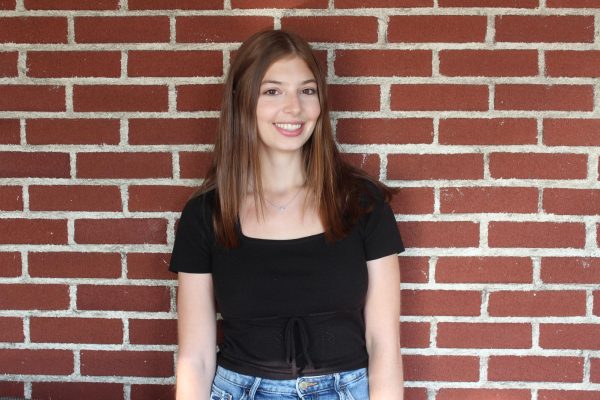












Bucknell welcomed Lauren Strunk in July as its new associate dean of health and wellness, a role focused on strengthening resources for student well-being. In this role, she oversees five key areas of student life: the Counseling and Student Development Center (CSDC), the Interpersonal Violence Prevention and Advocacy (IVPA) Office, Alcohol and Other Drug Prevention and Education, Nutrition Services and Bucknell Student Health.
Her path to Bucknell spans roles at several institutions. “My last position was at Dickinson College, where I oversaw their health center. And then prior to that, I was at Florida Gulf Coast University, where I oversaw prevention and wellness in a health promotion office. I also served as the victim advocate there. Prior to that, I was their clinical case manager, which was the inaugural position there. And I started my career in Brooklyn as a career counselor.”
Though her experiences have varied, a consistent thread has been her dedication to student health. “I’ve done almost everything in student affairs, with the exception of housing,” she reflected, “but I’ve always really enjoyed working with students.”
Strunk, originally from Long Island, expressed her excitement about returning to the Northeast. “Having left New York and gone to Florida, I really wanted to be back in the Northeast, so that’s how I ended up back in Pennsylvania. And I’ve always known of Bucknell, so it was really exciting when this position came up. It was nice at orientation to interact with a lot of parents and families that were from Long Island, and being able to connect with them in that way.”
Strunk’s philosophy centers on viewing student health broadly. “We really try to focus on the 10 dimensions of wellness,” she explained. “It’s the concept that in order for a person to be well, they really need to give energy and attention to each of those areas.”
Under her leadership, the health and wellness pillar is embracing collaboration. “We really try to look at students from a holistic standpoint, making sure that they’re supported in every way that will make them be successful, both inside and outside the classroom. We try to do a lot of cross-collaboration regarding programming that we do.”
Central to this vision is a harm reduction approach. “In every area that we have in the health and wellness pillar, we really try to provide education and then let students make decisions that are best for them. We give you the education and then you decide what’s best for you. We’re not going to tell you what to do, but if you have questions or need guidance, we’re absolutely here for that.”
Part of what energizes Strunk is the variety of her work. “What I love about my role is that there’s no typical day,” she said. “So I spend a lot of time meeting with other members of the Student Affairs Division, but then also working with colleagues in academic affairs to talk about how we can make sure students feel supported while they’re here at Bucknell.”
As a new leader on campus, Strunk is focused on learning before making sweeping changes. “My short-term goal is really to listen,” she emphasized. “To hear what people’s experiences have been within the areas I oversee, and then to talk about what’s been going really well, what can be better and how we can make that change.”
Looking ahead, she hopes to expand student-driven wellness initiatives. “One thing that I’d really like to see within the future is to have a student-driven program to provide health education to other students. Students prefer to talk to students. I think it’s important to have other students help share the message that we want you to be healthy– that looks different for every person.”
Awareness and accessibility are priorities for Strunk. “The services are free, and so students should know that’s covered by their tuition,” she stressed. “Whether it’s needing a counselor to talk about something that’s going on personally, not feeling well and needing to go to Bucknell Student Health or if there’s a dynamic going on within a relationship that you want to talk about to our victim advocate, we’re all accessible.”
She hopes students know they don’t need to navigate alone. “If you’re not sure what door to go to first, just choose any of them, whichever one you’re most comfortable with, and then we could always connect you to the other areas. I’m also always here as a resource. If you had a great experience, tell me about it. If you didn’t have a great experience, tell me about it. If you have an idea, let me know. Because that’s the best way that I can learn is from student experiences.”
Strunk has already noticed a common theme among Bucknell students: over-involvement. “I think this high level of stress is due to over-involvement, or wanting to do it all, and feeling that you only have value if you are productive,” she observed.
She hopes students can embrace the idea of rest. “College is hard. Being a human is hard. So I think it’s okay to have nothing to do. It’s okay to have a blank schedule… If you are relieved because something was taken off your schedule, that means that you are burnt out.”
When asked what motivates her in her role, Strunk enthusiastically replied, “Students for sure! The students are what makes me want to do the work that I do.”
Her hope, above all, is that students see her as approachable. “The most important thing for me is for students to feel comfortable sharing ideas, however that can happen. I want to hear what we’re doing well, what we could do better and what new ideas students have. We have a really vocal student body, and I hope students feel empowered to come talk to me.”