













Caitlyn Scott ’27 held an interest meeting this past Tuesday for a Turning Point USA chapter at Bucknell. Her main motivation is to “forward the fight for the traditional values and principles” on which “America was founded.” Those traditional values, to Scott, include “limited government that aims to protect liberty instead of control it, free markets that reward innovation and hard work ([the]American Dream idea), individual responsibility and accountability for one’s words and actions, strong national defense and protection of our citizens and ultimately respect for and acknowledgement of the importance of faith, family and country.”
According to Turning Point USA’s website, United States Senator Rafael Cruz, who uses the preferred name “Ted,” has said that Turning Point USA “is the fastest-growing youth movement in America, and they have a potential to play a decisive role in shaping our country for decades to come.”
Scott believes that “people with more conservative beliefs or values feel afraid to voice them because of how people with opposing viewpoints” can make “detrimental judgements about their character.” During introductions of potentially interested club members at the beginning of the meeting, multiple people expressed that they had lost friendships or other connections based on their expressed conservative politics. Scott wants to emphasize “the importance of listening, understanding and most importantly respecting people who have different beliefs than you.” For this club, Scott plans to “draw from TP USA’s focuses and beliefs a great deal,” but she hopes to have the heart of the chapter be a space to “peacefully and respectfully discuss such views […] that we bring, [as well as] those who disagree with us.”
For years, Scott has been following the messaging of Charlie Kirk, the founder of TP USA who was recently killed, online through clips of debates his team has put out on “social media in general”; she loved “watching him debate college students.” Kirk himself dropped out of college after one semester in 2012. “Respectful free speech,” Scott says, is not “end all be all. Free speech is having the ability to express your own beliefs and opinions without fear of prosecution; as long as your free speech isn’t inciting violence, then it should be allowed where it’s allowed.” Some of the things Kirk spoke for through his platform include gun rights at the cost of excessive gun violence related fatalities (as he considered it “worth it” to “have a cost of, unfortunately, some gun deaths every single year so that we can have the Second Amendment to protect our other God-given rights”), that “it should be legal to burn a rainbow [flag] in public,” and that “someone should have just took care of [transgender people] the way we used to take care of things in the 1950s or 60s.”
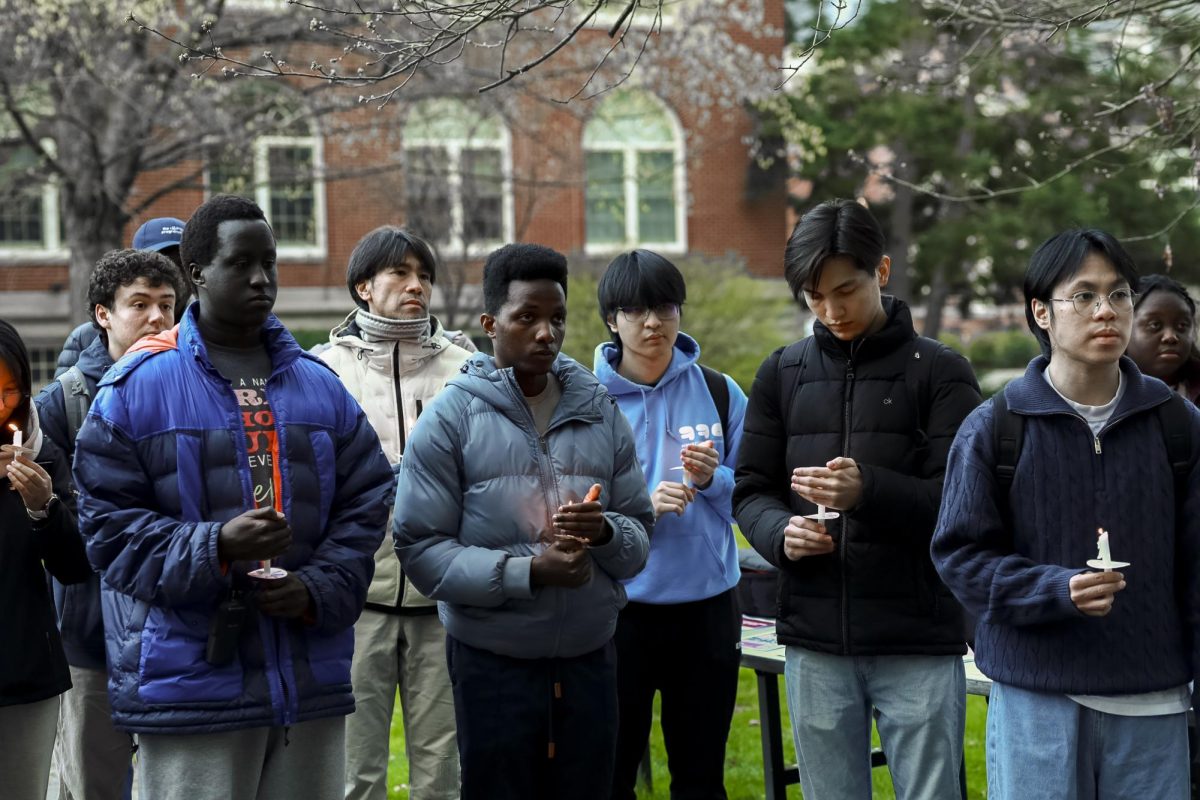
Scott also expressed that it’s “easy behind a screen to celebrate the death” of Kirk, who she termed “an innocent man,” but that “violence is not the answer to disagreement. If it was, the country would erupt in violence everyday.” Scott and the students interested in establishing a Turning Point chapter at Bucknell are joining an ongoing greater concern regarding gun violence at schools nationwide— a concern many experts have analyzed can only be mitigated through gun law reform. At the same time that Kirk was shot, a shooting was carried out at Evergreen High School in Colorado, making it the 11th school shooting this year to result in injuries and/or deaths and the 53rd school shooting since the beginning of the year. As Scott herself put it, “that [violence] can get scary, fast,” and for students around the country, that reality has already been realized.

