








Growing up, no matter where I was, there was always an expectation that if you were different from the majority, you would naturally find comfort among others who were also different.
In classrooms, in hallways, in new cities and unfamiliar institutions, I was often told that minorities naturally gravitate toward one another because we “get it.” We share experiences of being overlooked, misunderstood or simply excluded. And for a long time, I believed that. I agreed with it. It made sense. There was comfort in knowing that behind different accents, skin tones and stories, we carried similar burdens.
There is truth in that. There is something powerful about finding people who understand what it means to constantly translate yourself for others. To explain your name. To defend your background. To feel the weight of representing more than just yourself. In those moments, community feels like oxygen.
But recently, I began to realize that solidarity can become something else if we are not careful. It can become an assumption.
Somewhere along the way, “we understand each other” can subtly turn into “we are the same.” Our differences get smoothed over. Our stories become interchangeable. Our identities get compressed into neat categories that feel easier to manage. And suddenly, the very spaces meant to protect us begin to repeat the same patterns we criticize in the majority.
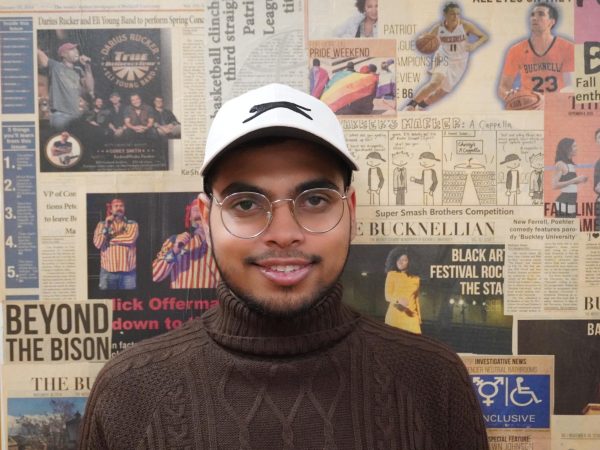
I noticed that most clearly when I started reflecting on my own identity. I am brown. I am international. I am Muslim. Each of these labels carries meaning on campus. Each shapes how people see me before I even open my mouth. But none of them tells my whole story. My experience is not the universal experience of international students. It is not the universal experience of brown students. It is mine. The same is true for others.
A student can be a person of color and queer. A student can be first-generation and undocumented. A student can be disabled and from a low-income background. These identities intersect in complex ways. They create unique challenges and unique forms of resilience. They cannot be reduced to a single narrative of struggle. Yet sometimes, we assume familiarity without listening. We replace curiosity with comfort.
At Bucknell, especially in a place like Lewisburg where minority communities are small but deeply diverse, this matters. Many of us depend on each other for support. We find safety in shared differences. We build friendships that become lifelines. But we also carry a responsibility to honor how different our stories actually are. Being marginalized does not make us interchangeable.
Understanding is not automatic. It is learned. It comes from asking questions without expecting simple answers. It comes from listening without preparing a response. It comes from allowing someone else’s experience to exist without measuring it against your own. Ironically, assumption is something minorities know well, because we live under them. We know what it feels like to be reduced to labels. To be treated as representatives instead of individuals. To have our identities interpreted before we speak. So when we do this to one another, even unintentionally, it recreates the very dynamics we hope to escape. This is why we need to move beyond surface-level inclusion.
We do not just need more cultural showcases, heritage months or symbolic gestures. Those things have value, but they are not enough on their own. They do not guarantee understanding. They do not ensure respect. What we need is cultural humility. Cultural humility means approaching each other with openness rather than certainty. It means recognizing that no identity comes with a universal script. It means accepting that our own experience, no matter how meaningful, is limited. It asks us to say, “Tell me about your story,” instead of “I know how this feels.” It asks us to listen more than we speak. It asks us to let people define themselves.
For me, this realization has been challenging. It has forced me to rethink moments when I assumed connection meant complete understanding. It has pushed me to be more careful with my language. More patient in conversations. More willing to sit with difference, even in spaces that feel familiar. It has reminded me that solidarity is not about sameness. It is about standing together without erasing one another. Being a minority is not a single story. It is a collection of stories shaped by history, geography, family, faith and personal choice. When we honor that complexity, we create communities that are not only supportive but honest. Not only welcoming, but deeply respectful.
At Bucknell, where many of us are learning who we are away from home for the first time, this work matters. Our campus does not need perfect language or polished statements. It needs ongoing conversations. It needs students willing to admit what they do not know. It needs communities that value listening as much as speaking.
We can still lean on one another. We can still build solidarity. We can still find strength in shared differences. But we must do so with humility. Because real belonging is not built on assumptions. It is built on respect.