













The other day, I found myself people-watching from my window in Vedder. Outside was lively with students taking pictures under the cherry blossoms, playing spikeball, tanning on blankets, painting and laughing with friends. Then, out of nowhere, a girl sprinted across the Smith-Vedder quad, another close behind her, armed with a water gun. In that split second, I was transported back to senior year of high school, when everyone was caught up in the chaos of senior assassin. The rush of it all came back so quickly it almost felt physical, like I had stepped into a memory instead of just recalling one.
That wasn’t the first time I’ve had that kind of déjà vu here. Moments like that have made me pause and think about how similar college can feel to high school, at least in certain ways. Before coming to Bucknell, I remember feeling overwhelmed by how big of a transition it was supposed to be. But once I got here, I started to wonder how different it really is. Which led me to the question: Does Bucknell feel like high school?
For starters, Bucknell has a high school feel in terms of size. It’s small, which is something I heard over and over again while touring. The smaller student body makes it easier to feel seen. I’m not just another number, instead, I can actually connect with people. Students here are known for being social and approachable, and I’ve found that to be true. I recognize familiar faces walking to class, heading into town or showing up at the same workout classes. That familiarity is often framed as one of Bucknell’s greatest strengths, and in many ways, it is. It allows for more meaningful interactions and relationships that might be harder to build at a larger, less personal university.
At the same time, that closeness can feel eerily similar to high school. Seeing the same people every day makes it clear how much social circles overlap. It creates this sense that everyone, in some way, knows everyone else or at least knows of them. While that can be comforting, it can also feel a little too familiar, like stepping back into a dynamic I thought I had moved on from.
That sense of familiarity carries into the classroom as well. In many of my classes, especially in my Spanish class, participation isn’t optional– it’s expected. Professors know your name, your voice and even your habits. If you don’t speak up, it doesn’t go unnoticed. They pick up on your personality and can tell when you’re putting in effort and when you’re not. Professors here make a real effort to be accessible and involved in their students’ lives, which creates a more personal learning environment. But that also means there’s a level of accountability that feels a lot like high school. There’s no disappearing into the background or hiding in the back row because you’re part of the class whether you want to be or not.
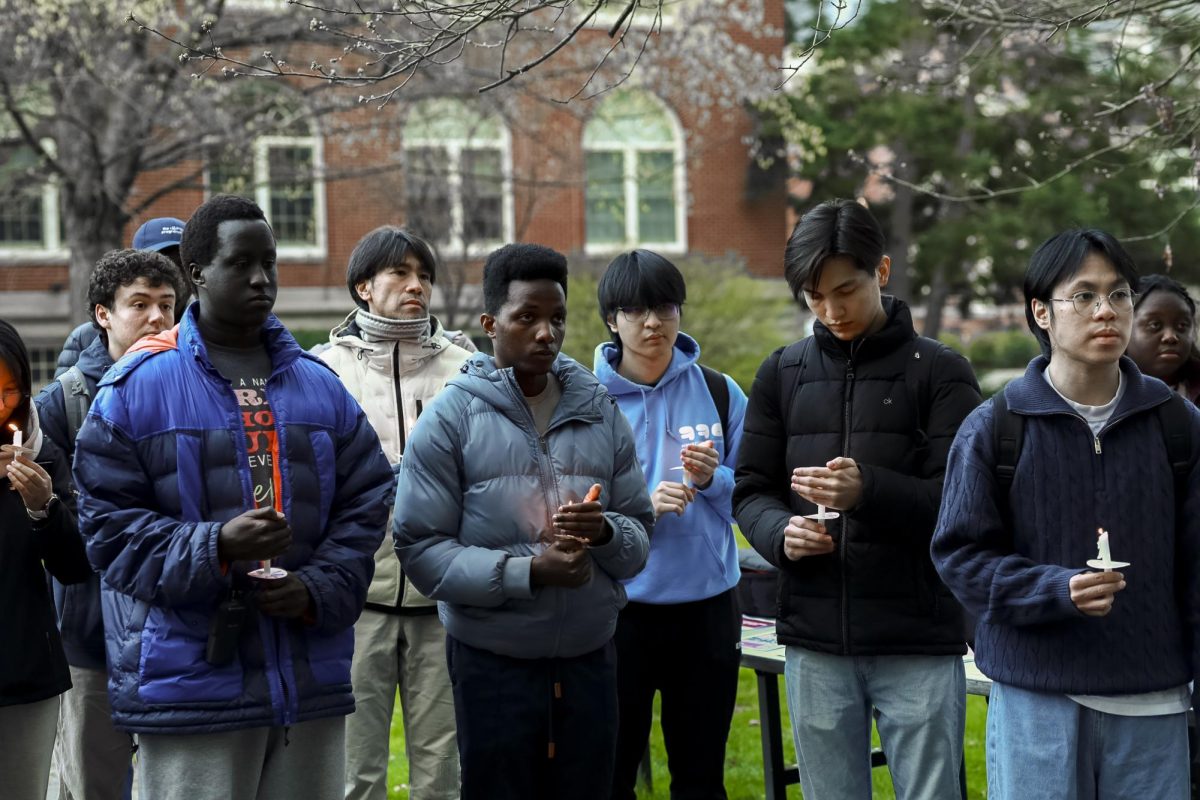
Then, there are the traditions. The Candlelight ceremony, held during both orientation and graduation, is one of Bucknell’s most meaningful events. It brings the entire class together in a shared, emotional experience that marks both a beginning and an end. But it also feels reminiscent of high school milestones. There’s something comforting about that continuity, even if it blurs the line between the two experiences.
And maybe that’s the point. Maybe Bucknell is meant to feel a little like high school not in a limiting way, but in a grounding one. It offers that same sense of community, recognition and shared experience, but with more independence layered on top. Because for all the ways it can feel familiar, there are just as many ways it clearly isn’t. No one is structuring your day anymore. No one is checking whether you’ve done your work or telling you where to be next. You choose how to spend your time, who you invest in and what you prioritize. The responsibility is yours, and that changes everything. The environment might feel similar but the way you move through it is entirely your own.